Not every public sector contract needs a full-blown tender submission.
You don’t always need to write 30 pages, jump through hoops, or spend weeks glued to a portal just to win work from a council or public body.
There’s a simpler way in.
And if you’re:
- Not quite ready for full tenders yet, or
- Ready… but need some solid contracts under your belt first
Then this is definitely worth knowing.
The Simple Route In: RFQs
It’s called an RFQ, a Request for Quotation. When a public organisation needs something that’s considered lower value, they don’t always run a formal tender process. Instead, they’ll just ask a few suppliers to send over a quote. That’s it.
No massive submission. No complex quality questions.
If your price stacks up and you meet the basic requirements, you could win the job.
Simple.
So What’s “Low Value”?
It depends. There isn’t one magic number across the board. It varies based on:
- Who the buyer is
- What sector they’re in
- What they’re buying
- Their internal rules
All public bodies still have to follow the Procurement Act and the relevant procurement thresholds. But when a contract falls below the main legal thresholds (often called sub-threshold contracts), they have more flexibility.
And that’s where things get interesting. Because below those thresholds, organisations can follow their own in-house rules.
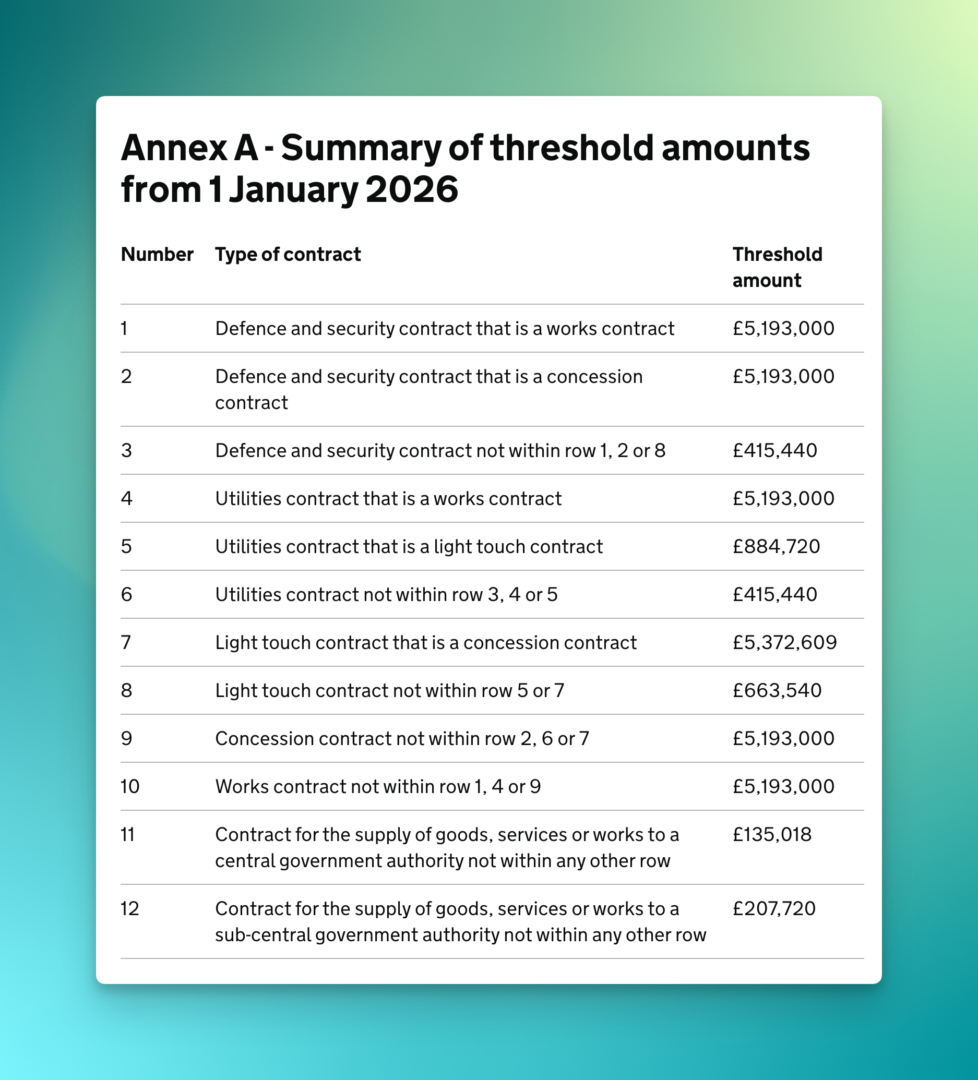
The image below shows the current thresholds for each contract type.
The Bit Most People Ignore: CPRs and CSOs
Every council and public body has internal buying rules. They’re usually called:
- Contract Procedure Rules (CPRs)
- Contract Standing Orders (CSOs)
It’s these documents that spell out exactly how they handle lower-value contracts.
They’ll tell you:
- At what value they stop running full tenders
- When they can just request quotes
- How many quotes they need
- How suppliers get considered
Most businesses never look at these, but they should. Because this is where you find the opportunities that don’t go through a big public tender.
Where To Find This Information
Start with the organisation’s website.
Look for:
- “Doing Business With Us”
- “Supplier Information”
- “Procurement”
Some councils publish their Contract Standing Orders online. And when you read them, you’ll often see that contracts under a certain value don’t need a formal tender at all.
In some cases, they just need three quotes. No open competition. No long submission. Just a straightforward quote process.
Why This Matters
Tendering takes time. Proper time.
If you’re running a business, managing staff, delivering work and trying to grow, adding full tenders into the mix can feel heavy.
RFQs are different and can be a good way to grow your business without the tender headache. They’re also a brilliant way to get started and build experience.
They also help you build a portfolio of contract examples that can later turn into the references buyers will ask for when you do go after larger tenders.
The Bottom Line
Not every public sector contract has to go out to tender.
If you take the time to:
- Understand how your target organisations buy
- Read their Contract Procedure Rules
- Make sure your business is visible and easy to find
You can start chasing RFQs and building relationships with public sector buyers.
Smaller contracts. Less red tape. An easier way in.